Information provided by the client; listed in no particular order.
Service Overview
Construction testing services cover five core fields — foundation works, superstructure, building materials, municipal bridges and judicial appraisal — handling testing from foundation to superstructure and extending to building safety appraisal, curtain-wall testing and building energy-efficiency testing.
The services are delivered by a third-party testing institution with ISO system certification, equipped with a full range of professional testing instruments that meet the requirements of every type of testing work; witness sampling, on-site testing and structural performance verification are carried out in accordance with current standards and codes.
All testing work is carried out strictly on the principles of impartiality, accuracy and scientific rigour, providing domestic and international clients with dependable test data and professional, accurate test reports.
Service Scope
Testing instruments and equipment are fully equipped to meet the requirements of every kind of testing work. The core services cover five fields and extend to building appraisal, municipal transport and a range of specialist testing.
Foundation Testing
Specialist foundation services including pile testing, ground improvement testing and foundation pit monitoring, covering integrity and bearing capacity verification for bored piles, precast piles and composite foundations.
Main Structure Testing
Testing of concrete, masonry and steel structures, together with building structural safety appraisal and on-site structural performance verification.
Building Materials Testing
Testing of conventional building materials, energy-saving materials, indoor environment and decoration materials, covering witnessed sampling and on-site re-inspection.
Municipal & Bridge Testing
Testing and evaluation of roads, bridges and tunnels plus related material performance testing, including bridge load tests and structural condition assessment.
Judicial Appraisal
Capable of building safety appraisal, fire-damaged structure appraisal and construction quality appraisal, and able to issue appraisal opinions for use in judicial proceedings.
Full Business Coverage
Building Appraisal & Assessment
- Building Safety Appraisal
- Building Serviceability Appraisal
- Building Reliability Appraisal
- Building Hazardousness Appraisal
- Building Seismic Appraisal
- “Five-No” Construction Appraisal
- Change-of-Use Inspection
- Post-Disaster Inspection & Appraisal
- Screening Appraisal
- Strengthening & Renovation Design
Structural & Foundation Testing
- Steel Structure Testing
- On-Site Main Structure Testing
- Foundation Engineering Testing
- Witnessed Sampling Testing
Municipal & Transport Testing
- Bridge & Metro Safety Assessment & Monitoring
- Bridge & Tunnel Testing
- Road Testing
- Foundation Pit Monitoring
- Automated Monitoring
- Pipeline CCTV Inspection
- GPR Void Detection
Specialist Testing
- Curtain Wall Testing
- Indoor Environmental Quality Testing
- Fire Safety Assessment
- Lightning Protection Testing
- Building Energy Efficiency Testing
- Outdoor Advertising Structure Inspection
- Communication Tower & Mast Safety Inspection
Project Cases
Witnessing the city's growth, safeguarding engineering safety. The institution has taken part in the testing of many landmark buildings and infrastructure projects, serving residential and commercial real estate, municipal transport, rail transit, industrial plants and the renovation of existing buildings.
Road Defect & Void Detection on an Urban Sub-district Road
Traffic loading and leakage from underground pipe networks cause subgrade settlement and pavement damage during service, and in severe cases road collapse — while underground voids cannot be found by eye. The project used ground-penetrating radar to carry out a non-destructive “diagnosis” of roads in the district and screen for void hazards.
Building Settlement Observation for Section I of an Urban-Rural Integration Resettlement Community (Phase III of Shantytown Redevelopment)
The project has a total floor area of about 730,000 m² and a total land area of about 31 ha, comprising 35 18-storey and 2 17-storey high-rise residential buildings with 3,660 homes in total, plus a kindergarten, a farmers' market and a community health station. Building settlement observation was carried out during construction.
Main Structure Quality & Safety Testing for Block 2-A of a Yellow Rice Wine Industrial Park
The project has a total land area of about 73 ha and a total investment of about RMB 5.73 billion, implemented in two phases with about 28.7 ha in phase one. At full capacity it will produce 100 million litres of premium yellow rice wine a year and bottle 120 million litres of small-package yellow rice wine a year. Main structure quality and safety testing was carried out for block 2-A.
Structural Safety Appraisal of the Factory Buildings of a Motorcycle Manufacturer
The company covers about 26.7 ha and operates three standardised forced-pace two-wheel motorcycle assembly lines, with a manufacturing capacity of 500,000 complete motorcycles and 1 million engines a year. A structural safety appraisal was carried out on its existing factory buildings.
Engineering Testing for a Commercial-Residential and Commercial Support Facilities Plot
The plot has a land area of 176,278 m² and a total floor area of 527,884.54 m² (372,932.05 m² above ground and 154,952.49 m² below ground), located within a new-town unit in the north of the city. Engineering testing was carried out on the commercial housing, commercial and office buildings and support facilities within the plot.
Bridge Testing for a Cloverleaf Full Interchange and Its Viaduct
With a total cost of over RMB 200 million, the project is a key traffic-relief node in the area, technically known as a cloverleaf full interchange, and consists of a viaduct crossing the arterial road, ramps in four directions and the upgrade of the surface road. The viaduct is 495 m long with six lanes in both directions.
Testing of an Interchange Bridge Where a Road Crosses an Existing Railway, and of Bridges Along the Route
The interchange bridge is 665 m long and 16.5 m wide and was completed in late 2020, successively crossing several roads, watercourses and an existing railway line and linking the east-west transport corridor of the area. Bridge testing was carried out on the interchange bridge and on Bridges No. 1 and No. 3 along the route.
Municipal Road & Bridge Deck Static Load Tests and School Railing Stress Testing for a 1 km² Comprehensive Development in a High-Speed Rail New Town
The project covers talent apartments, self-held land for an innovation and entrepreneurship platform, roads and supporting infrastructure, resettlement housing, a primary school, green space and plazas, and watercourses, with a provisional total investment of RMB 4.51 billion. Static load bearing tests were carried out on municipal roads and bridge decks, and stress testing was carried out on school railings.
2023–2024 Indoor Air Quality Testing for the Hangzhou Company of a Central State-Owned Property Developer
Indoor air environmental quality testing was provided to the developer's Hangzhou company for 2023–2024, covering its premium residential, commercial and office projects.
Air Quality Monitoring for a 1 km² Comprehensive Development in a High-Speed Rail New Town
The area lies in the south of the new town's core urban axis and has a total land area of about 104 ha. Air quality monitoring was carried out for the comprehensive development project.
2022–2024 Centralised Pile Testing Procurement for the Hangzhou Area of a Central State-Owned Property Developer's East China Region
Centralised pile testing procurement services were provided to the developer's East China regional Hangzhou area for 2022–2024.
2023–2024 Annual Pile Testing Cooperation Agreement with the Hangzhou Company of a Central State-Owned Property Developer
An annual pile testing cooperation agreement for 2023–2024 was signed with the developer's Hangzhou company; the developer operates in several cities within the province and has developed more than 60 projects.
On-Site Testing for a New-Town Plot Project of a Central State-Owned Property Developer
The project has a total land area of 84,052 m² and a total floor area of 335,425.6 m² (235,345.6 m² above ground and 100,080 m² below ground) with a floor area ratio of 2.8. The plot includes public rental housing and facilities such as a cultural activity station, an indoor sports and fitness point, a health service station, a farmers' market and an elderly care service centre. On-site testing was carried out for the plot project.
Foundation Pit Monitoring for Phase II of a Resettlement Housing Project (Plots 1# and 2#)
The project comprises two plots: plot 1# has a total floor area of about 195,300 m² with 1,420 resettlement homes and 1,542 vehicle spaces; plot 2# has a total floor area of about 183,700 m² with 986 homes and 1,283 vehicle spaces. Foundation pit monitoring was carried out.
Third-Party Monitoring (Eastern Section) for a Riverside Water Conveyance Tunnel and Road Upgrade Project
The project is about 6.3 km long and mainly comprises a new water conveyance tunnel and a road upgrade, including a shield tunnel about 5.62 km long with an inner diameter of 13.3 m and an outer diameter of 14.5 m, adopting an integrated design scheme covering pipeline, transport and landscape. Third-party monitoring of the eastern section was undertaken.
Testing of a Depot on an Urban Rail Transit Line
The depot has a land area of 371,984 m² and is planned to include a comprehensive office building, driver apartments, a canteen, a cover slab area and metro function rooms beneath the cover, with a total floor area of 272,318.5 m² (258,605.5 m² above ground and 13,713 m² below ground) and 417 vehicle parking spaces. Engineering testing was carried out.
Testing of a Super High-Rise Landmark Building
The project has a total transferred land area of 172,396 m² and a total floor area of 1.284 million m², with uses covering commercial, business and entertainment and recreation. One of the plots is planned for a tower of about 399 m, with a building height of no more than 400 m. Engineering testing was carried out on the super high-rise landmark building.
Instruments & Equipment
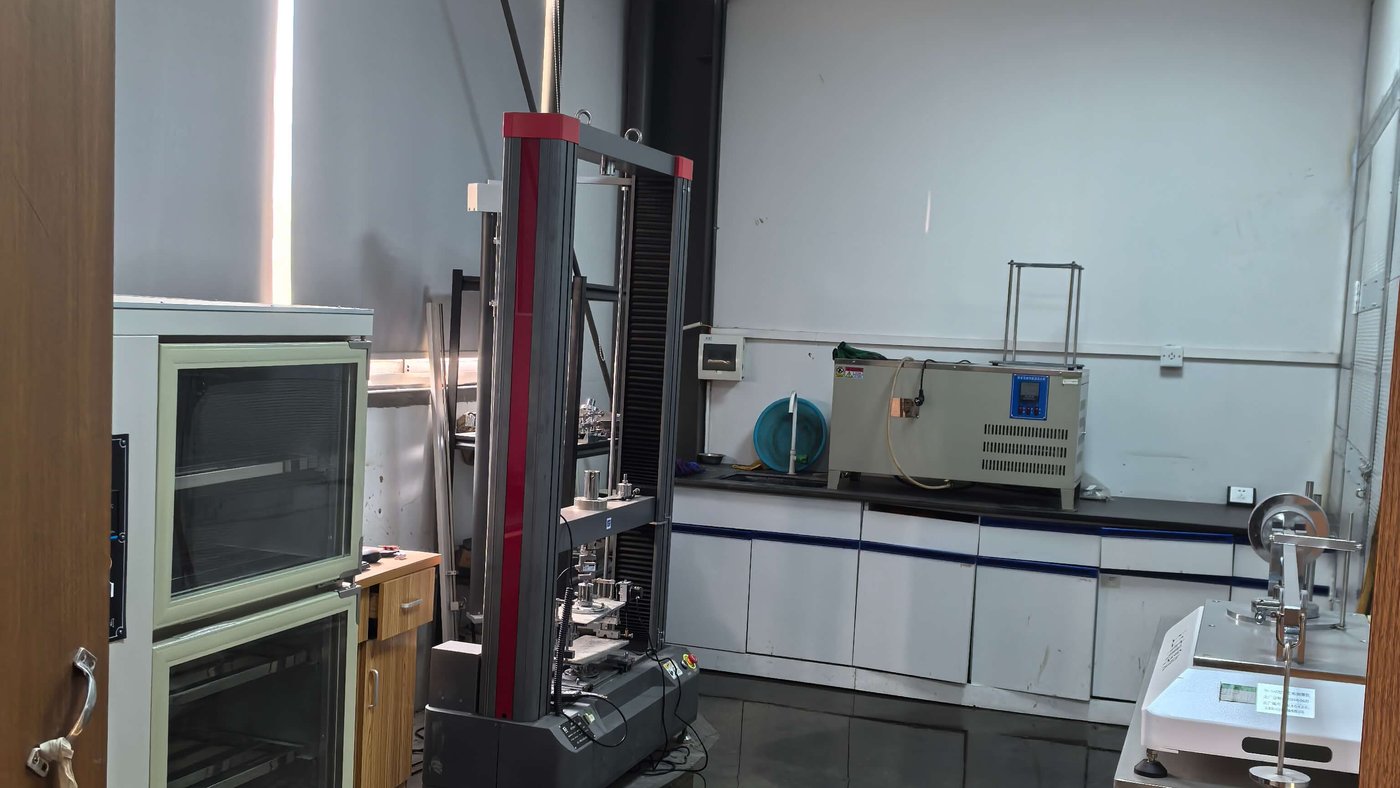
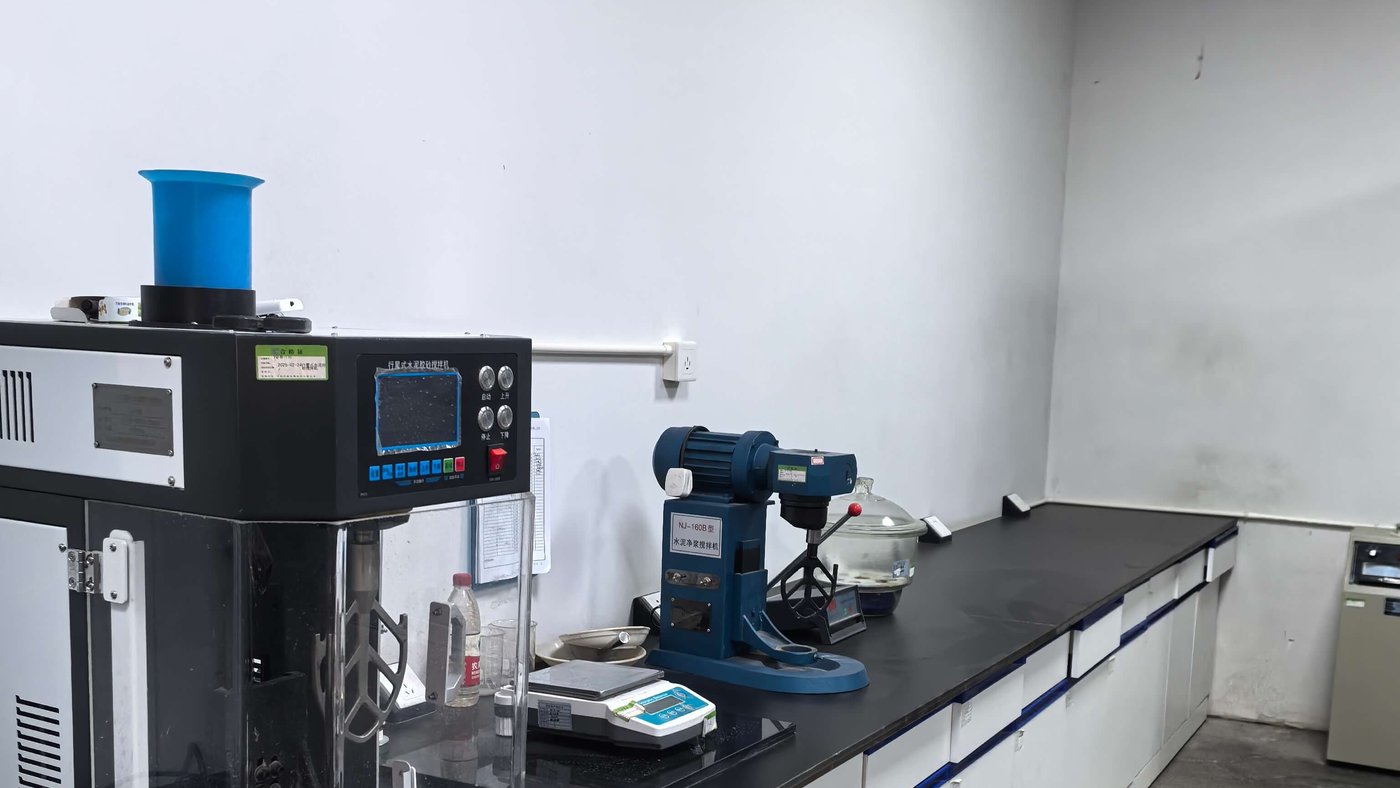
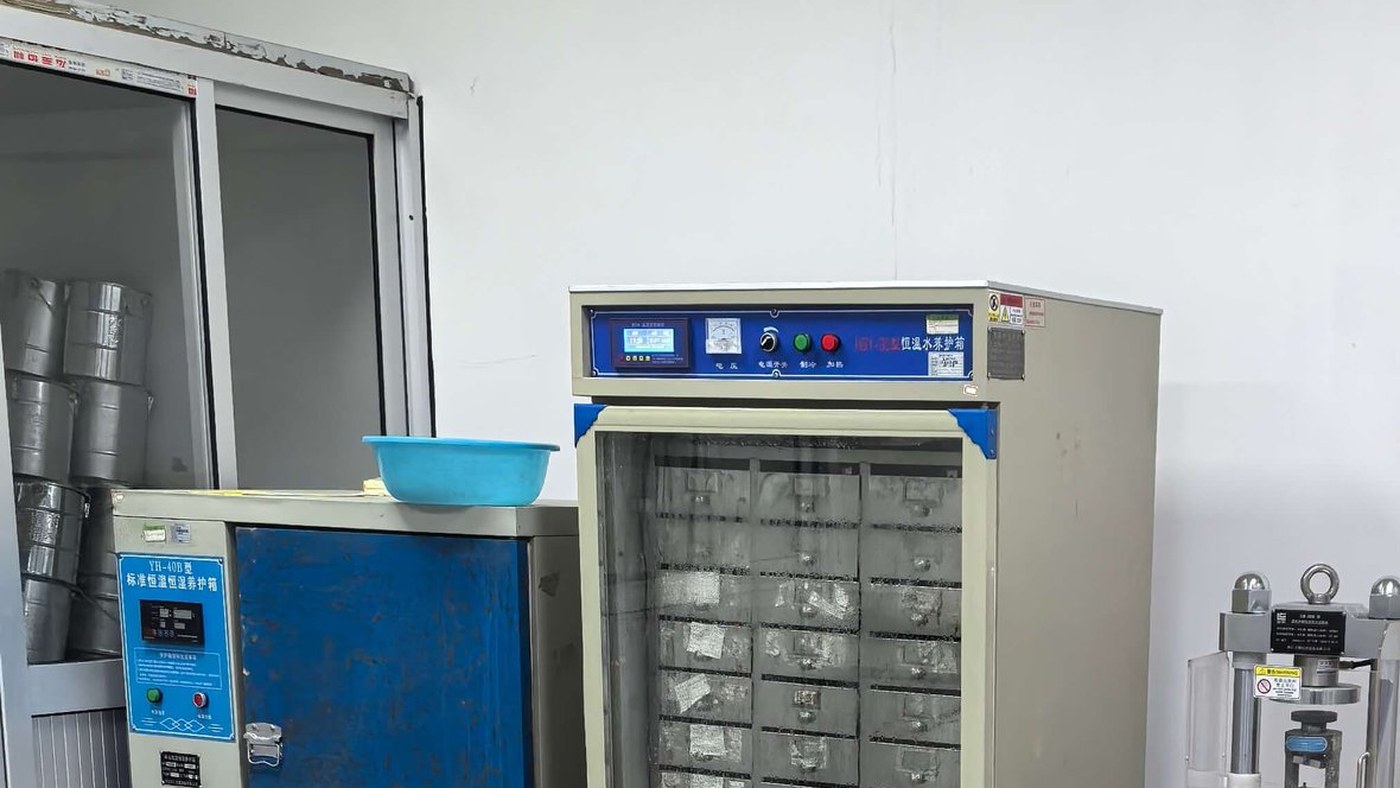
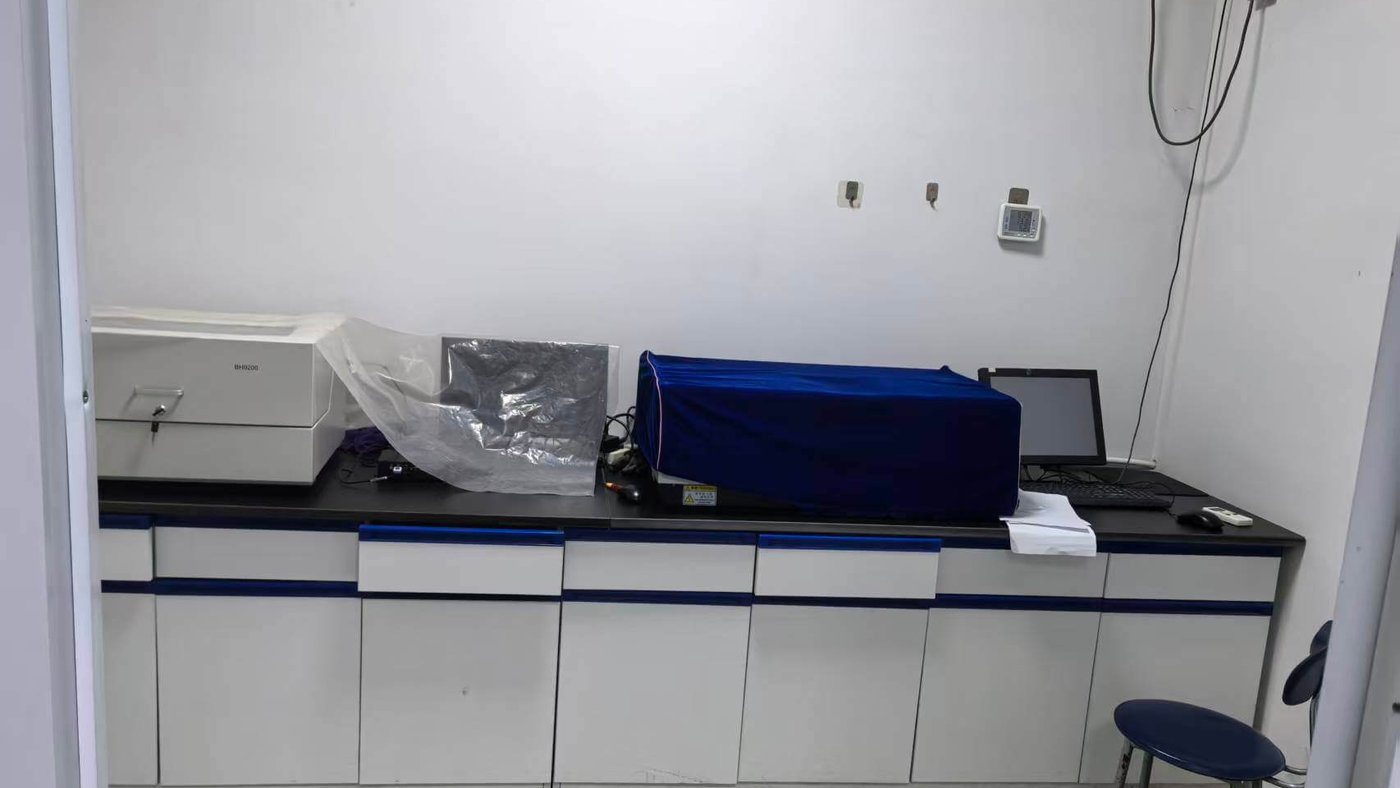
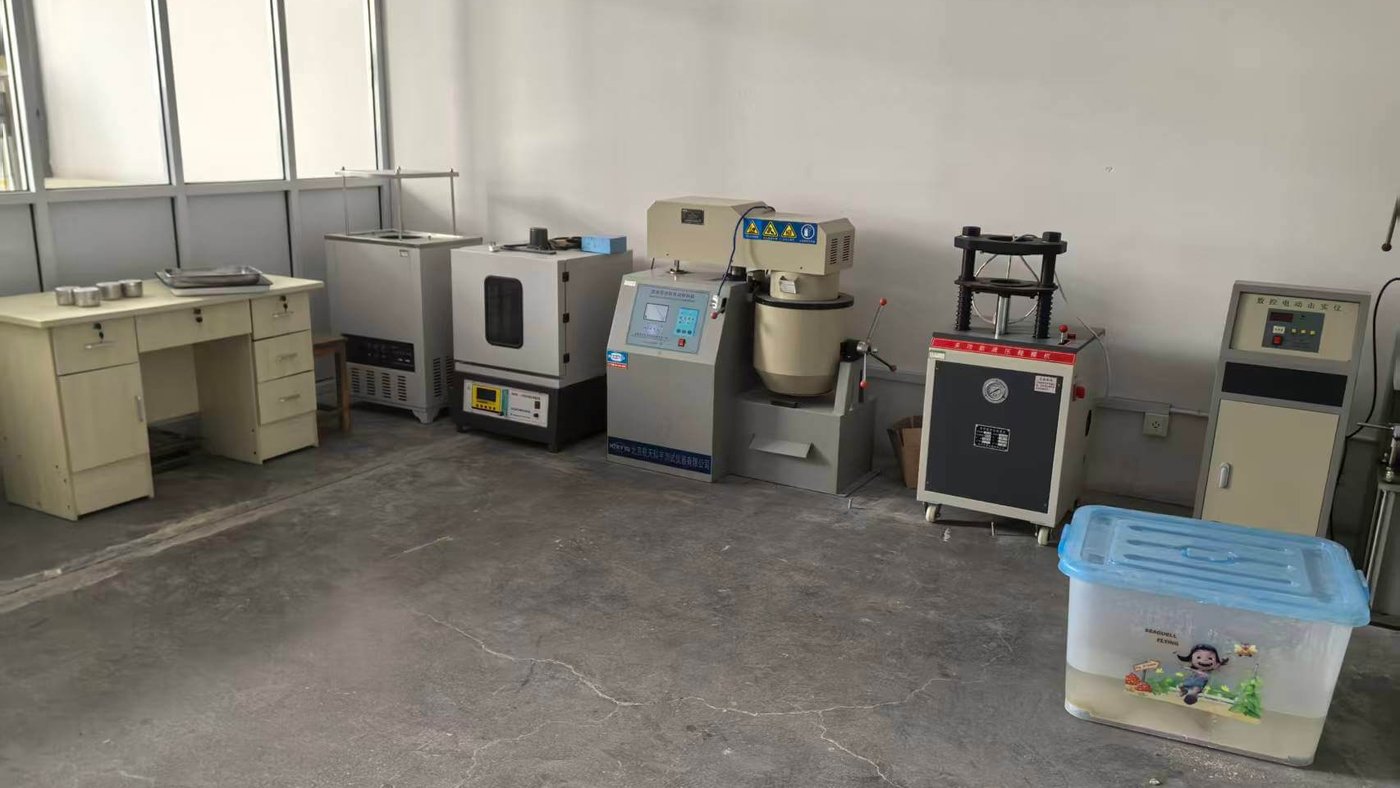
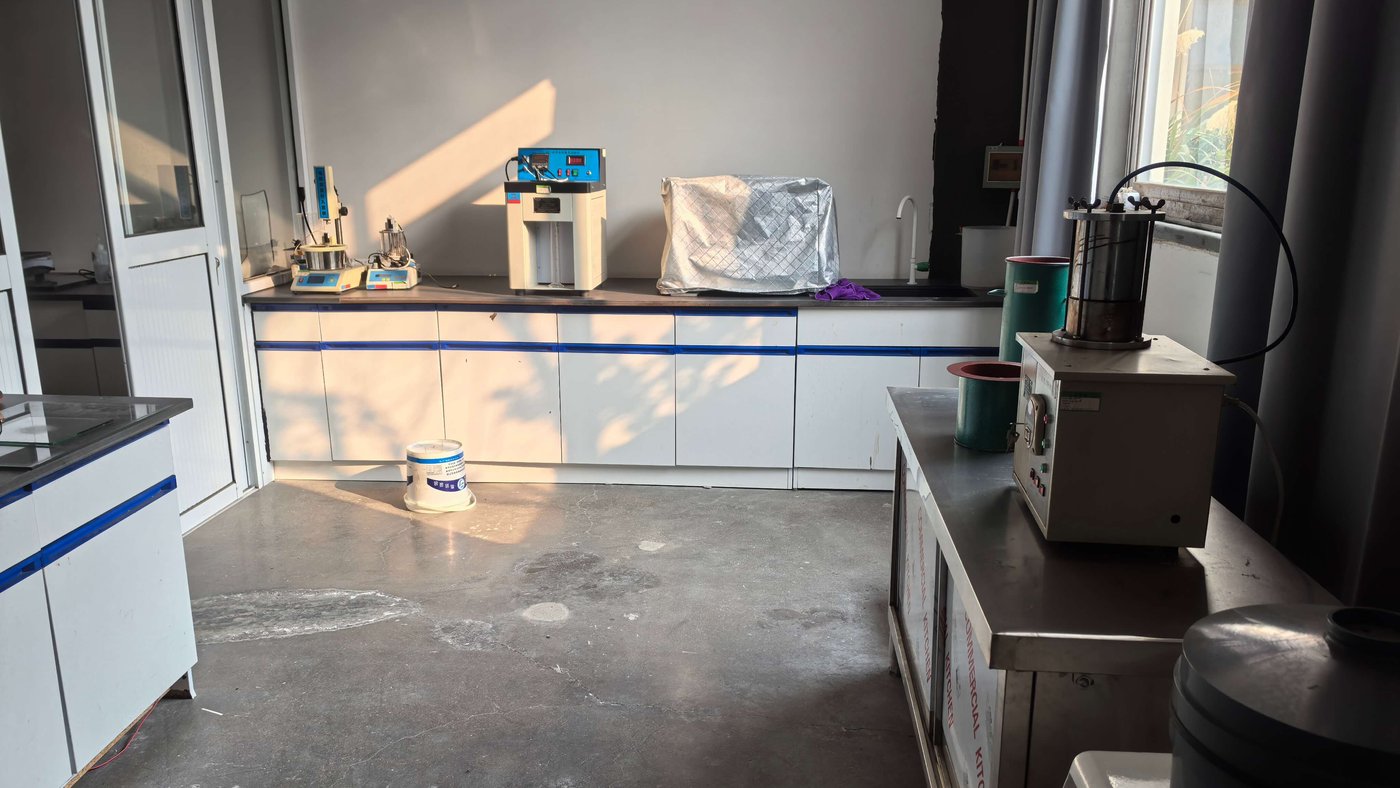
The institution currently operates four testing sites with a floor area of more than 2,000 m² and over 1,000 sets of testing instruments, fully sufficient for every type of testing work. The main instrument and equipment categories are as follows:
| Total Station / Level | Deformation and settlement observation, horizontal and vertical control surveying |
|---|---|
| Mechanical Testing Machine | Strength and mechanical performance tests on concrete, rebar, masonry and similar materials |
| Chemical Analyser | Chemical composition analysis of cement, admixtures, water quality and environmental samples |
| Ground-Penetrating Radar | Non-destructive detection of road defects, subgrade voids and underground utilities |
| Non-Destructive Testing Instruments | Non-destructive testing of concrete strength, rebar distribution and cover thickness |
| Pile Testing Instruments | Pile integrity and bearing capacity testing (low strain, cross-hole sonic logging and similar) |
| On-Site Monitoring Equipment | Automated deformation monitoring of foundation pits, slopes and structures |
| Environmental Testing Equipment | Indoor air quality, building energy efficiency and physical environment parameter testing |
News Center
Following industry developments and continuously publishing technical explainers on engineering testing and appraisal.
About the Service Provider
The third-party testing institution whose overseas expansion is supported by FangService was founded in April 2018 with a registered capital of RMB 20.8 million and is a national high-tech enterprise located in Hangzhou, in the Yangtze River Delta region. It currently operates four testing sites with a floor area of more than 2,000 m² and over 1,000 sets of testing instruments. Its departments include the Chief Engineer's Office, General Office, Marketing Department, Foundation Testing Room, Structural Testing Room, Air & Energy Efficiency Room, Building Materials Room, Municipal Materials Room and Finance Room, with more than 80 managers and technicians.
Our team is made up of university professors, senior engineers and experienced industry specialists with deep theoretical grounding and extensive practical experience, including Class-1 registered structural engineers and other specialists. The institution holds a Construction Engineering Quality Testing Institution Qualification Certificate and a Inspection and Testing Institution Qualification Accreditation Certificate, has been awarded AAA Credit Enterprise, Outstanding Testing Institution and Science & Technology Progress Award honours, and is certified to ISO 9001 quality management, ISO 14001 environmental management and ISO 45001 occupational health and safety management systems.
As a third-party testing institution providing testing technology services, it serves domestic and international clients strictly on the principles of impartiality, accuracy and scientific rigour, staying grounded in the market and working tirelessly to build engineering that ordinary people can trust.
Company Founded
Co-founded by professors and senior engineers in the fields of university civil engineering and disaster prevention engineering, and established in a university science park.
Rapid Growth
Obtained foundation testing qualifications and passed RMB 10 million in output value that year.
Qualification Expansion
Added four qualifications covering structure, steel structure, air and materials, gaining capability in building safety appraisal, seismic appraisal, fire damage appraisal and judicial appraisal; output value passed RMB 30 million.
Business Expansion
Extended into bridge and tunnel, energy efficiency, municipal materials and curtain wall testing. Based in Hangzhou, its services reach countries participating in the Belt and Road Initiative.
Which countries and regions have strong demand for construction engineering testing and appraisal services? Visit the customer development map dashboard to see the global distribution of potential customers, or search the global prospect directory right here on the FangService website.
Want your company and products to be showcased here too, to step up your overseas expansion and win more international orders? Partner with FangService and enjoy going global together! Contact us.
Does your project need third-party testing?
Tell us your project type, structural form and testing purpose. We will match the right testing field, propose a scheme and provide a quotation within 24 hours.
Get a Free Quote