Article
October 26, 2026
The first email from an overseas buyer usually contains one request: please send your CNAS certificate. It is a reasonable thing to ask for and it is usually the wrong question — not because the certificate does not exist, but because the certificate alone does not answer what the buyer actually needs to know, which is whether the report will be accepted in the jurisdiction where the concrete is being poured.
Two abbreviations get used interchangeably in procurement emails and they should not be. CMA is a Chinese domestic qualification with legal effect inside China. CNAS is an accreditation of a laboratory’s competence, and it is the one that can, under conditions, travel. A laboratory can hold one without the other. A single report can carry a mark for one test and no mark for the next test done in the same building on the same afternoon.
This article separates the two, shows where each one appears on a report, explains why the annex decides more than the certificate does, and ends with three questions worth asking before you commission anything. It does not promise that a Chinese report will be accepted in your market. Nobody can promise that, and a supplier who does is telling you something about themselves.
Two Letters, Two Different Jobs
CMA is the older abbreviation for what the certificate now calls 检验检测机构资质认定 — qualification accreditation for inspection and testing institutions. It is the permission a laboratory in China needs in order to issue data and results with probative effect to the public. The rules come from the State Administration for Market Regulation; in practice the certificate is issued by the provincial market regulation bureau where the laboratory is located. For a laboratory doing statutory work it is not optional.
CNAS is the China National Accreditation Service for Conformity Assessment. It is an accreditation body rather than a regulator: it assesses a laboratory against ISO/IEC 17025 and, where the laboratory meets it, accredits it for a defined list of tests. CNAS is a signatory to the ILAC Mutual Recognition Arrangement and to the Asia Pacific Accreditation Cooperation arrangement, which is why a CNAS-accredited report can be recognised by accreditation peers in other economies.
The practical difference is this. CMA says a laboratory is allowed to test, and its results count in China. CNAS says an accreditation body has examined how this laboratory works and found it competent for specific tests. One is about permission; the other is about demonstrated competence. Overseas buyers usually need the second. Chinese projects almost always require the first.
Both can hang on the same wall. Neither of them is ISO 9001, and that is where a surprising number of procurement conversations go wrong.
What Each Certificate Proves — and What It Does Not
Five documents turn up in the same email thread, and they answer five different questions. Reading them as one thing is what produces the disappointment later.
| Document | What it proves | What it does not prove |
|---|---|---|
| CMA qualification accreditation (检验检测机构资质认定) | The laboratory is permitted to issue data with probative effect inside China, for the items listed in its annex | Anything at all about acceptance outside China |
| CNAS accreditation to ISO/IEC 17025 | An accreditation body has assessed this laboratory’s competence for the specific tests named in its scope | That your test is one of them — or that the receiving authority recognises the mark |
| ISO/IEC 17025 as a standard | The criteria a laboratory is assessed against: method validation, traceability, equipment, records, impartiality | A certificate on its own. It is a standard, not an award |
| ISO 9001 / 14001 / 45001 | That a management system for quality, environment and safety is certified | That any specific test is performed competently |
| A report with a red seal and a signature | That someone put their name to these numbers on this date | That the sampling was independent, or that the laboratory was accredited for that item |
Two rows in that table cause most of the confusion. The first is the ISO row: 9001, 14001 and 45001 certify a management system — how the organisation runs quality, environment and safety. They say nothing about whether a particular test is performed correctly. A laboratory can hold all three and still not be accredited for the test you need, because the three certificates are not about tests at all.
The second is the scope row, which is important enough to have its own section below.
The Scope Is the Part Nobody Reads
Every accreditation and every qualification comes with an annex: a schedule listing the items, parameters, standards and sometimes the methods the laboratory is covered for. The certificate is the cover. The annex is the content. When a buyer asks are you accredited, the useful answer is not yes — it is a page number.
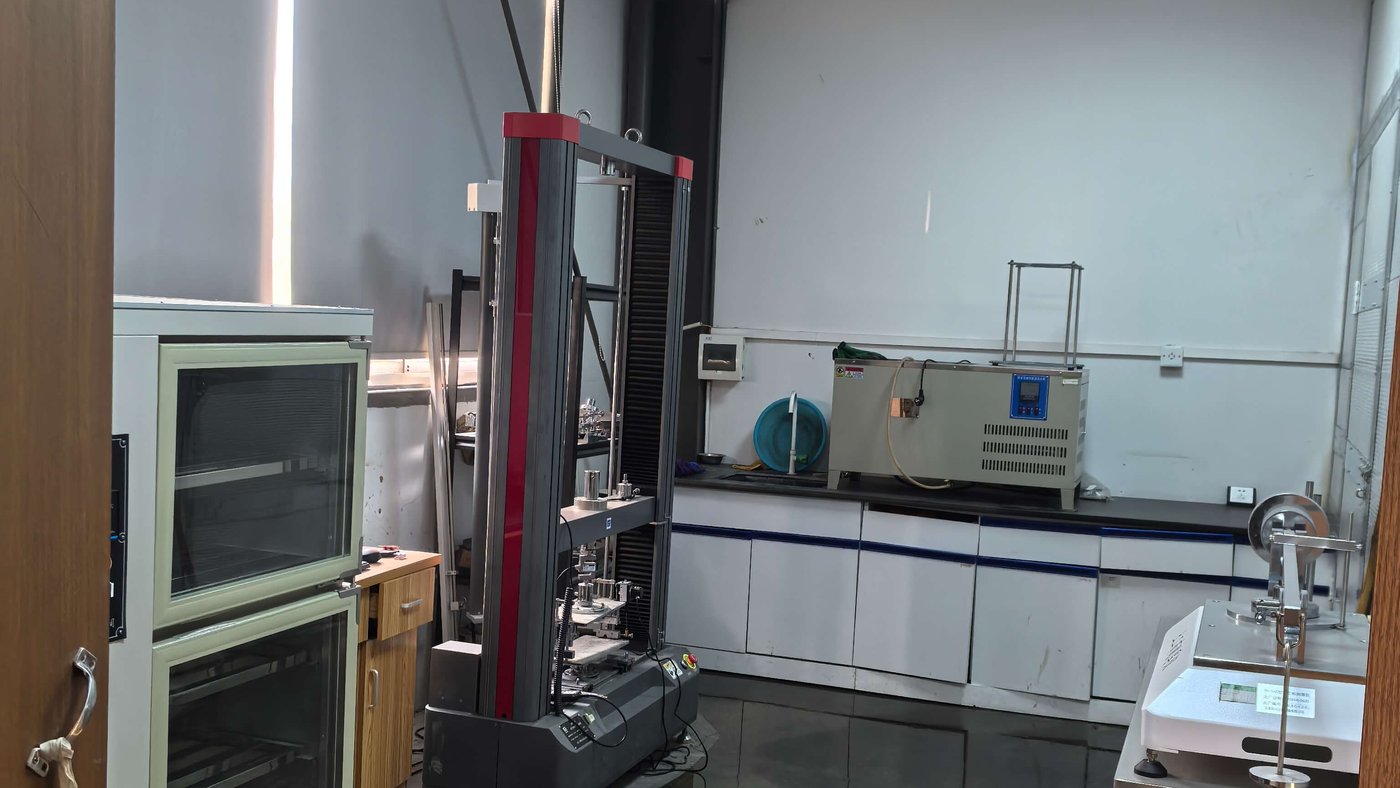
Accreditation is granted item by item. A laboratory can be accredited for concrete cube compressive strength and not for on-site watertightness testing of a curtain wall. It can be accredited for a method in its 2019 revision and not in the revision your specification names. When a test falls outside the accredited list, the laboratory may still be able to perform it — but the report cannot carry the accreditation mark for that item, and the mark is the only part that travels.
So the thing to request is not your CNAS certificate. It is: the annex to your certificate, with our item highlighted, and confirmation that the standard revision in the annex is the one our specification cites. A laboratory that cannot produce that page quickly is telling you something as well.
There is a second scope question that is easy to miss. Scope follows the site. Accreditation and qualification are granted to a named laboratory at a named address. If your samples are tested at a different site of the same organisation — a branch, a partner laboratory, a mobile unit — the annex you were sent may not cover the work. Ask which site will do it, and check that site against the annex.
Why Some Countries Only Accept Their Own Labs
ILAC-MRA is often described as though it made a report universally acceptable. It does not. What the arrangement establishes is that the accreditation bodies recognise each other’s accredited laboratories as working to equivalent standards. Whether a report is accepted is decided by whoever receives it — a regulator, a building control body, a project engineer, a court, an insurer — and those bodies remain free to require a laboratory accredited inside their own system.
In practice there are three positions, and it helps to know which one you are in before you spend money. One: the receiving party accepts an accredited report from abroad, sometimes with a certified translation or an apostille. Two: the receiving party accepts only a laboratory accredited in its own economy — common for statutory inspection, for public infrastructure, and for anything a regulator signs off. Three: the receiving party accepts the data but not the conclusion, so the report becomes an input to a local assessment rather than the assessment itself.
None of these is a quality judgement about Chinese laboratories. They are rules about who carries the liability. That is why the answer to will my report be accepted is never a property of the laboratory. It is a property of the receiving authority, of the contract, and of the purpose the report is put to.
Which is also why the same report can be perfectly usable for an incoming material check at your own warehouse and close to worthless as a completion acceptance submission in your project’s jurisdiction. Same paper, different job.
Three Questions to Ask Before You Commission Anything
Ask these in the first email, before the price. A supplier who answers all three in writing is a supplier you can plan around. A supplier who answers only the first one is answering a different question than the one you asked.
| Question to ask | Why it decides the job | What a usable answer looks like |
|---|---|---|
| Is our test item inside your scope annex, under the revision my specification cites? | Out of scope means the report cannot carry the mark, and the mark is the part that travels | A page reference and a highlighted line — not a yes |
| Who is going to accept this report, and what do they require? | Acceptance is decided by the receiving body, not by the laboratory that did the work | A named authority and its stated requirement, ideally in writing |
| Which site will test the sample, and does that site’s annex cover the work? | Accreditation and qualification are granted to a named laboratory at a named address | The site name, and confirmation that it appears on the annex |
The third question surprises people who have only dealt with domestic suppliers, because it implies that the answer could be no. It can be. Large organisations run several sites and the annexes are not identical. Finding that out before the samples ship is a two-minute problem. Finding it out after is a two-month one.
Where We Stand, Stated Plainly
Our own page lists the inspection and testing institution qualification accreditation certificate and the construction engineering quality testing institution qualification, together with ISO 9001, 14001 and 45001. The first two are what make a report usable inside China. The three ISO certificates describe how the laboratory is run; they are management system certifications, and they are not an accreditation of testing competence.
The page does not list a CNAS scope, and we are not going to imply one by omission. If your buyer, your specification or your regulator needs a report issued under an accredited scope, say so in the enquiry and include the test item and the standard revision. We will check whether it falls inside what we can cover, and answer before quoting. If it does not, we will say so then — not after you have paid.
What we can settle without any accreditation question is the part that does not depend on it: which standard the report will be issued against, which site will do the work, how long each stage takes, and what the report will and will not state. That is the information you need in order to decide, and all of it is available before the first invoice.
Send the test item before the price request
Tell us the material, the standard revision and the destination market. We will confirm what can be tested, which document you will receive, and what it will not cover — before any number is quoted.
Request a quoteSee the testing scope and the project record
Foundation, structure, materials, municipal, bridge and curtain wall testing; four sites and over 1,000 instruments; reports in Chinese and English with the raw records.
View specifications