Article
April 10, 2018
Luzon and the Visayas average around twenty tropical cyclones a year; central Vietnam, the Chao Phraya basin and Malaysia's east coast each have their own flood calendar. Outages stretch from hours to days, and a flooded battery never recovers. This article covers installation height, cabinet protection, spares pre-positioning and the real bottleneck in restoration speed.
The Outage Curve of Typhoon Season
Southeast Asia's hazard map is not one map but four layered together. The Philippines sits in the centre of the Western Pacific typhoon belt: Luzon and the Visayas average about twenty tropical cyclones a year, five to eight of them at severe typhoon strength, and a single passage can leave a province without grid power for three to seven days. Along central Vietnam's Da Nang, Quang Nam and Quang Ngai corridor the season runs from September to November, where typhoons plus orographic lift produce extreme rainfall and flash floods that take out the transmission lines running beside highways. Thailand's lower Chao Phraya basin around Ayutthaya and Pathum Thani is low and flat; the prolonged 2011 flood submerged industrial estates and base stations together, and took nearly two months to recede. Malaysia's east coast states of Kelantan and Terengganu see repeated widespread outages during the northeast monsoon from November to February. These four hazards share exactly one property: outage duration shifts from hours to days, and a backup designed for four hours is exhausted by the first afternoon.
How Flooding Destroys a Battery
Water damage to a lead-acid battery happens in layers, and most of it is irreversible. The first layer is the case and terminals: once water reaches the terminal area, posts and connecting straps form an electrolytic cell, severe corrosion appears within days, and contact resistance rises until the battery can no longer carry discharge current. The second is the electrolyte: even a sealed battery immersed for days will take up water through case porosity and the vent valve, diluting the acid and lowering specific gravity, so capacity fades. The third is internal shorting: muddy floodwater carries silt and conductive ions, and once it bridges positive and negative plates inside the cell the battery self-discharges to zero and will not recharge. The most overlooked is the fourth: batteries that were submerged but still discharged at the time fail in a cluster three to six months later, because corrosion has already happened and has simply not reached the tipping point. So the post-flood keep-or-replace decision cannot rest on open-circuit voltage; it requires a capacity discharge test, and anything below 80% of rating should be replaced.
Installation Height and Cabinet Design
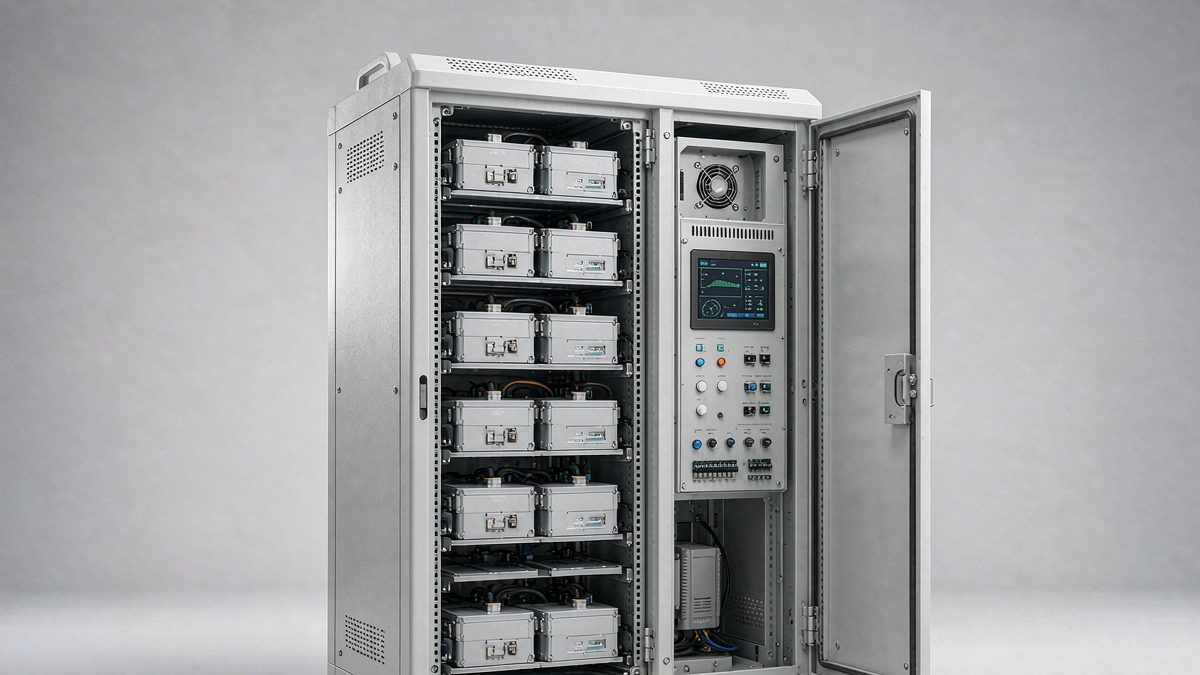
Most disaster resilience is decided at the drawing stage. First, installation height: the bottom of the battery bank should sit at least 0.5m above the highest recorded flood level — and at riverside sites in the Philippines and central Vietnam that often means 1.2m or more. Where floor mounting cannot be raised, switch to wall-mounted battery boxes or set the bank on a concrete plinth. Second, cabinet protection: at least IP55, double gasket seals on door edges, and a labyrinth drain path at the air intake so wind-driven rain cannot enter directly. Third, drainage: fit drain holes at the cabinet floor sloping outward, and raise the plinth at least 200mm above grade to stop surface runoff backing up. Fourth, corrosion: coastal sites — anywhere in the Philippines, the Vietnamese coast, Malaysia's east coast — carry high salt fog, so enclosure, bolts and earthing bars must be specified to C4 or C5 corrosion class, or the structure fails before the electronics do. None of these four is expensive, but omit one and the whole site is rebuilt after the next typhoon.
Centralised versus Distributed: Who Restores Faster
Post-disaster restoration speed is driven far more by backup architecture than by crew size. Centralised backup — large 2V cells in an equipment room, such as the GFM series at 200–3,000Ah — has a lower unit cost and is easy to monitor centrally, but a single failure has wide impact and replacement needs lifting equipment, which in an area with cut roads often means waiting three days or more. Distributed backup — an independent 12V front-terminal string per cabinet — has small per-point capacity and good fault isolation; a single monobloc weighs 30 to 60kg and two people with one wrench can swap it, so restoration can be done by motorcycle teams. In the Philippine island provinces and Vietnam's central highlands, distributed architecture typically restores service more than twice as fast as centralised. The practical answer is a hybrid: centralised capacity at core sites, distributed replaceability at edge sites, with a design target of full string replacement within two hours at any single site — an indicator far closer to disaster reality than any capacity figure.
Spares Pre-Positioning and Drills
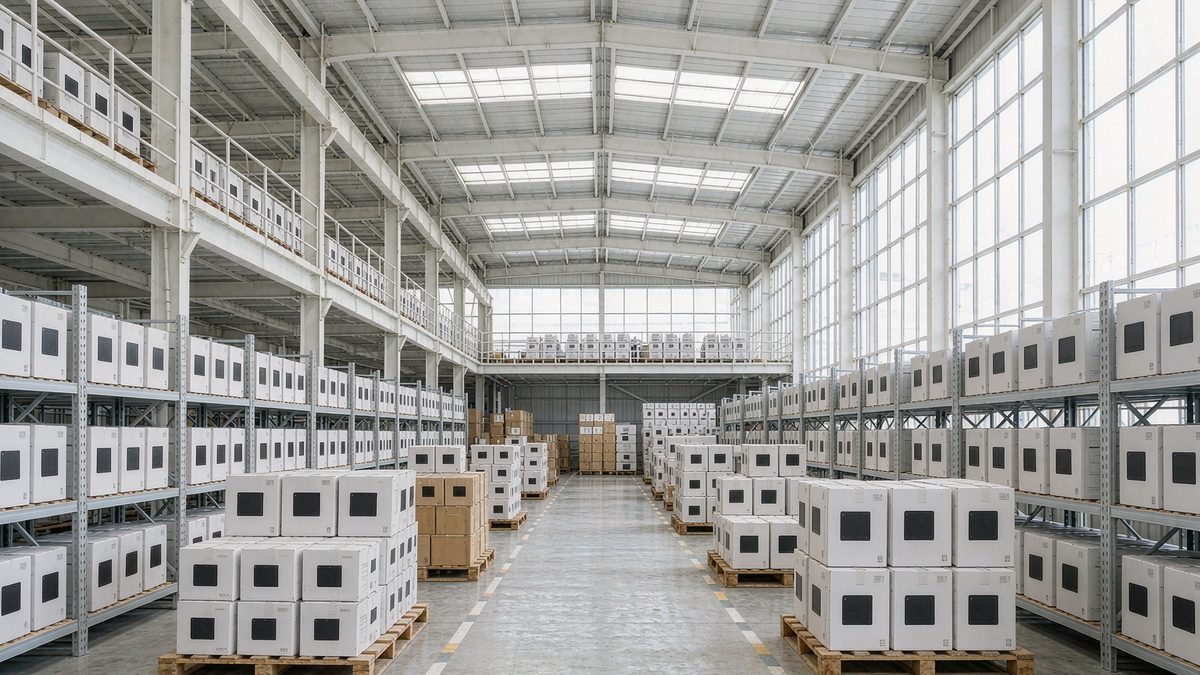
Resilience ultimately comes down to two plain questions: where are the spares, and can the crew actually do the swap? For spares, location matters more than quantity. Set forward warehouses by hazard zone, each covering a four-hour drive radius, stocked at 5% to 8% of the site count in that zone — and stocked as complete strings, not individual monoblocs, because nobody has time to match cells on site after a typhoon. The warehouse must also hold connecting straps, terminal covers, insulated tools and a capacity tester; field data shows the item most often missing at a restoration site is not the battery but the strap and the torque wrench. Drills should be designed around a no-grid, no-road, no-network scenario: assume the site itself is out of contact, send the crew out with a paper site list and a mechanical key, recharge from a generator on site and complete a full string replacement, all against a stopwatch. Run it once before each monsoon season and compare actual time with the two-hour target — the gap is next year's work list. Operators who drill seriously typically restore over 90% of sites within 72 hours; those who do not tend to lose the first week to confusion.
The First Week After a Typhoon: Order of Restoration
Post-disaster restoration is not a matter of repairing every site at once; it follows a strict order, and getting the order wrong multiplies total recovery time. First priority is transmission aggregation points and core nodes, because when they fail the dozens of downstream sites cannot backhaul even with power restored — repairing them achieves nothing. Second priority is sites carrying emergency communications and enterprise private lines, which governments typically require to be restored first after a disaster, with delay bringing additional compliance pressure. Third priority is macro sites covering dense population, where traffic concentrates. Suburban and rural sites come fourth. This order should be fixed as a list before the season and issued to restoration crews, generator dispatch and spares warehouses, rather than decided in an emergency meeting afterwards. Another routinely missed step is power versus transmission sequencing: many crews connect the generator first and then discover the backhaul is down, wasting the power. Confirm backhaul link status before deciding whether to start the generator. Finally, record everything: arrival time, restoration time, what was replaced and what remains outstanding at each site, captured on the spot and reported back. That record is both the basis for an insurance claim and the input to the next drill. Get the order and the records right in week one and the following three weeks are simply execution. View Telecom Backup Power Selection
Need a Custom Solution?
Tell us your project scenario and requirements, and we will match the right solution and provide a quote within 24 hours.
Get a Free QuoteView Telecom Base Station Backup Power Products
Nine series, sixty models: 12V front-terminal (6-FMX, 50–200Ah, 12-year), high-temperature (6-FMXH, 55°C with double float life), gel (6-XFMJ, 15-year), deep-cycle (FTC, 1,500+ cycles), 2V power station (GFD / GFM, 200–3,000Ah, 15-year), high-rate (GFMHR, 500W–2,700W at 15 min), lead-carbon (LLC, 300–1,000Ah, 20-year, 4–5× PSoC cycling) and 48V LiFePO4 (SDA10, 50–200Ah, continuous 1C). Intelligent BMS with SOC/SOH monitoring and four protection classes, with optional dry contacts for existing site monitoring systems.
Explore Backup Power Selection and Pricing →